engineersheaven's Idea / Prospect
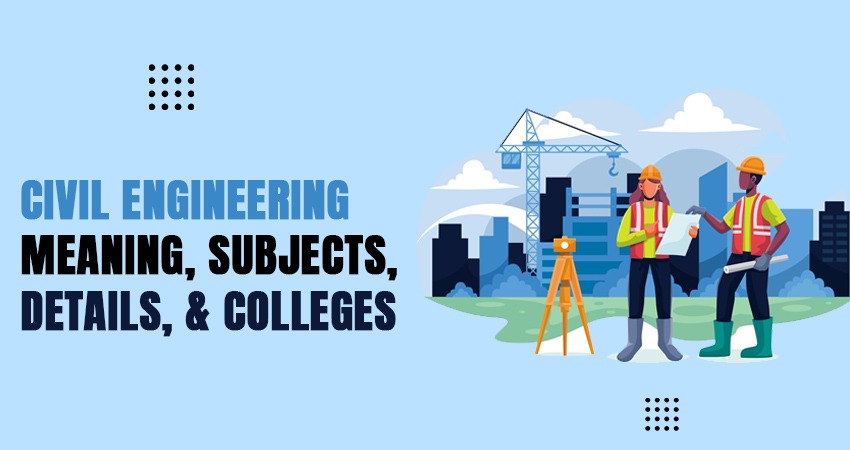
Civil engineering is one of the oldest and most important branches of engineering. As such, it also plays a central role in shaping modern society through the design and construction of its infrastructure. From roads to bridges to skyscrapers and dams, civil engineers help design and oversee nearly all aspects of everyday life. The following is a guide to what civil engineering is, important subjects, career scope, and best colleges in India if you are looking to pursue a career path in civil engineering.
And that is what Engineer's Heaven is all about, bringing you the best resources to become a successful engineer. Whatever help you need, whether it be course information you seek, exam preparation tips or career guidance, we are here to provide assistance!
What is Civil Engineering?
Civil engineering deals with the design, construction and maintenance of physical and natural built environments. These projects include highways, railways, airports, tunnels and sewage systems. Make sure these structures are safe, durable and sustainable. Their efforts have a direct impact on the economy, urban development, and public welfare.
The Civil Engineering Courses combines creativity, problem solving, and technical know-how. It involves extensive knowledge of materials, environmental considerations, and construction methodologies. Do what you love — if you love to build and solve real life problems, civil engineering may be exactly what you want.
Subjects in Civil Engineering
The technical and subject-oriented aspect of study are taught on many subjects in a bachelor of civil engineering degree. The civil engineering subjects include:
- Structural Engineering
This major deals with the designing of buildings, bridges and other structures. Engineers learn to make things stable and strong and safe.
- Geotechnical Engineering
It is concerned with soil mechanics and foundation design. Engineers study soil properties in order to build sound structures and infrastructure.
- Transportation Engineering
This topic includes the design and layout of roads, railways, and airports. It aids in making transportation more safe and efficient.
- Environmental Engineering
It deals with waste management and pollution control, water treatment. Urban areas evolve, engineers trying to design something eco-friendly around it.
- Construction Management
This topic covers project planning, cost estimation, and resource management. Many engineers are taught to deliver projects on time and within budget.
- Hydraulics Engineering & Water Resources
This includes creating dams, canals and irrigation systems. Fluid mechanics is studied by engineers to control water resources.
In addition to core subjects, students take surveying, material science, and computer-aided design (CAD). This prepares graduates to be effective at tackling real world engineering.
Civil Engineering Career / Job Options
There are great career prospects for civil engineers, whether in the public or private sector. As urbanization accelerates and infrastructure evolves, there is an increasing need for qualified professionals. Here are a few popular career choices:
Civil Engineers in Government Sector: Numerous civil engineers get hired as government engineers for authorities such as PWD, NHAI, municipal corporations, etc. They manage public infrastructure projects.
- Structural Engineer : Designs and analyzes structures to ensure they are safe and durable.
- Construction management: They manage teams, budgets, and timelines for a construction project
- Transportation Engineer: These professionals design and optimize road networks, analyze traffic flow, and manage public transit systems.
- Environmental Engineer: A professional who specializes in environmental protection technology, pollution control, and waste management systems.
They can also work in contractor organisations, consultancy farm and research establishment. We usually start our own business like construction or design services.
Top Civil Engineering Colleges in India
Construction of future is directly linked to the college you select for Engineering. Few of the best civil engineering colleges are in the country:
- Indian Institutes of Technology (IITs)
Ranked at 1: IIT Bombay, IIT Delhi, IIT Madras, IIT Kharagpur These institutes provide high standard education with appropriate research.
- All the National Institutes of Technology (NITs)
Striking the right chord among the NITs like NIT Trichy, NIT Warangal, NIT Surathkal have gained tremendous recognition for their academic excellence and placement records.
- Birla Institute of Technology and Science (BITS) Pilani
It has very good infrastructure and industry exposure. Its flexible curriculum allows students to delve into different fields.
- Delhi Technological University (DTU)
It is renowned for its excellent civil engineering department and collaborations with industries.
- VIT (Vellore Institute of Technology)
VIT provides state-of-the-art facilities, seasoned faculty, and excellent placement prospects.
This list includes some of the best colleges that offer excellent education and training to help students excel in their careers in civil engineering.
Why Choose Civil Engineering?
Civil engineering is one of the most exciting and rewarding domains. You’re able to build things that last and give back to society. Below are a few reasons to pursue this profession:
- Increased Demand: Infrastructure development is essential across the world, which means job security.
- Variety of Roles: Civil engineers serve in an array of industries, including construction, environmental management, and more.
- Creativity & Innovation: Engineers create original solutions for real-world problems.
- Good Salary Packages: The salaries and perks for civil engineers are quite good and with experience, they are offered great packages.
There is a blooming scope of civil engineering nowadays. It combines technical expertise, creativity, and problem-solving ability. This is for you if you care about building the future!
Engineers Heaven, if you are seeking help, niche or resources's knowledge. We help students grow successful careers with expert advice and Insights. Want to know more, Sign up with us and start your knowledge Civil engineering journey today!
(Disclaimer: This statistics could be different in different part of World and Different timeline. this statistics has been generated based on data available till 2025 or relavant time span.)
.jpeg)
Biomedical Engineering is a rapidly emerging career in India. And you use engineering and medical science to develop new healthcare solutions. If you want to have a career that makes a tangible impact on the world this is a very solid field. Now, let us take a look at the biomedical engineer salary, career path and Education needed to be a biomedical engineer in India.
What Is Biomedical Engineering?
Biomedical engineering is the application concerned with the design and development of medical devices. Assist in diagnosing, treating, and preventing diseases Engineers in this field collaborate with doctors, researchers, and manufacturers to create better healthcare technology.
Biomedical Engineer Education Requirements:
In order to become a biomedical engineer in India, you need appropriate education. Here’s what you should study:
Undergraduate Degree
The most common degree used for such courses is BE/B.Tech in Biomedical Engineering. Some opt for related fields, such as electronics or biotechnology. The students are admitted into the top colleges of the country through entrance exams such as JEE Main, JEE Advanced, and the state level entrance exams.
Postgraduate Studies
You can specialize with an M.Tech or M.E. in Biomedical Engineering colleges . A large number of students study MBA in Healthcare Management to get into Managerial jobs. Some also go for Ph. D. programs if they plan to pursue a research career.
Additional Certifications
Certification and short biomedical engineering courses enhance employment opportunities. It helps, e.g., taking courses in medical imaging or artificial organs or bioinformatics. Online platforms, however, also other institutions like Engineers Heaven provide learning material and certificate courses.
Typical Job Choices for Biomedical Engineers:
Biomedical engineering jobs can be numerous with a degree. Engineers work with hospitals, research centers, or industries.
Manufacturing of Medical Equipment
Medical devices are made by many companies and many biomedical engineers work for such companies. They also design devices such as MRI scanners, prosthetic limbs and heart monitors. Some of the Major Companies in India are Philips Healthcare, GE Healthcare, Siemens Healthineers.
Healthcare IT and Software
Biomedical engineers also work with healthcare software companies. Hospital management systems, AI-based diagnosis tools, telemedicine solutions. They get hired by companies such as Tata Consultancy Services (TCS) and Infosys.
Clinical Engineering
There is a need for the maintenance of medical equipment in hospitals, and this is where biomedical engineers come into the picture. They make sure devices such as ventilators and dialysis machines function properly. This role is significant in both private and government hospital.
Research & Development (R&D)
A lot of engineers do research institutes. They are used to develop new medical technologies, drug delivery systems, and bioelectronics. Research and Development opportunities are available with organizations like IITs, AIIMS, CSIR.
Entrepreneurship and Startups
Most biomedical engineers launch their own healthcare technology companies. Innovations in medical devices, wearable health tech, AI-driven diagnostics — those have massive potential. Companies like CureMetrix and HealthifyMe have found a market in this segment.
Biomedical Engineers Salary in India
Experience and skills will also affect salary and location. So, now let us see what are the biomedical Engineering Salary in India.
- Entry-Level Salary
5 lakh per annum are earned by fresh graduates. The metal cities get better salary jobs.
- Mid-Level Salary
3-5 years of experience: ₹6 to ₹10 lakh per year. Domain specialization, such as biomechanics or bioinformatics, is valuable and increases salary.
- Senior-Level Salary
Senior engineers (10+ yr experience): ₹12 to ₹20 lakh per annum Well-remunerated senior roles in research, management, and product development.
Top-Paying Companies
Medtronic, Johnson & Johnson — as well as GE Healthcare — have the best packages. The government research jobs also offer secure salaries.
Why is Biomedical Engineering important?
- High Demand
It will take longer than a few decades to fix the healthcare industry. Biomedical engineers are in demand in hospitals, research labs, and medical device companies.
- Innovation and Impact
Biomedical engineers develop life-saving technology. They make the quality of care better for millions of people.
- Diverse Career Paths
Opportunities in engineering, software development, research, and business are possible in this field. Engineers also work on robotics, prosthetics and nanotechnology.
How to Make a Career in Biomedical Engineering?
- Choose the Right College
Career opportunities are enhanced with a degree acquired from a top engineering institute. Good programs are offered by IITs, NITs, and private universities like Manipal Institute of Technology.
- Gain Practical Experience
Internships and projects definitely increases placement. Gain Real World Skills by working with hospitals, research labs, and biotech companies
- Develop Technical Skills
Very useful to know AI, programming and medical imaging software. Engineers Heaven courses assist in developing technical knowledge.
- Network and Stay Updated
Keep up with industry: Attend seminars, workshops, and other industry-related events to broaden your horizon and expand your network. For engineers to stay relevant and cut through the noise, they need to keep up with healthcare trends and the new technologies that follow.
Final Thoughts
What are the scopes in Biomedical engineering in India? It has nice salaries, exciting paths of career advancement and ways to improve health care. This field has something for everyone whether you want to work in research, manufacturing, or healthcare IT.
Engineers Heaven, if you are seeking help, niche or resources's knowledge. We help students grow successful careers with expert advice and Insights. Want to know more, Sign up with us and start your knowledge biomedical engineering journey today!
(Disclaimer: This statistics could be different in different part of World and Different timeline. this statistics has been generated based on data available till 2025 or relavant time span.)
.jpeg) One of the most Interesting field in India is Aerospace Engineering. It is responsible for aircraft, spacecraft, and advanced technologies. The necessity for qualified aerospace engineers is increasing, with rapid advancements being made. Nowadays, various sectors seek specialists in aerodynamics, propulsion and avionics.
One of the most Interesting field in India is Aerospace Engineering. It is responsible for aircraft, spacecraft, and advanced technologies. The necessity for qualified aerospace engineers is increasing, with rapid advancements being made. Nowadays, various sectors seek specialists in aerodynamics, propulsion and avionics.
We are Engineers Heaven, here to show students careers in aerospace engineering. These resources help aspiring engineers build a promising career in this area.
Why Aerospace Engineering ?
Aerospace engineering is a high-tech area which has tremendous opportunities. It unifies mechanical, electrical, and computer engineering. Those engineers build everything from aircraft and satellites to missiles and space exploration vehicles. The space programs of India have drawn interest from this sector. Hence, organizations like ISRO, DRDO provide a good career path.
Various private companies are also investing in aerospace. This translates to more job opportunities for recent graduates. This domain is a blessing for those who love advancement.
Aerospace Engineering Job Prospects
There are many career options for aerospace engineers in India. Roles abound in government and private sectors in research, design and manufacturing.
- Government Jobs
Some organizations that recruit aerospace engineers are ISRO, DRDO and HAL. They are stable and offer great career growth. Engineers are involved with advanced projects such as launching satellites and defense systems.
- Private Sector Opportunities
There are many private companies doing aerospace manufacturing. Companies such as Boeing, Airbus, and Tata Aerospace offer excellent employment opportunities. There are also startups now in space technology. Researchers work on satellites and rockets.
- Research and Development
There is exciting research in aerospace engineering. Engineers develop new aviation technology and ways to save on fuel. Research positions exist in academic institutions for innovators.
Higher Studies and Specialization
Most go now that they acquire masters in aerospace engineering. While you can pursue many different fields together such as aerodynamics, propulsion, or robotics, specialization will increase your career opportunities. Higher education also paves the way for international employment.
The Indian aerospace sector is speeding up. (GoI initiatives like “Make in India” promote local manufacturing.) And this creates aerospace Engineering jobs.
Role of ISRO and DRDO
ISRO has made the nation a leader in space research. It put satellites into orbit, visits deep space. All of them have come from DRDO, which is focused on defense technology and missile systems. These both have great company options for engineers for aerospace Engineering in India.
Private Sector Growth
Tata Advanced Systems and Mahindra Aerospace are among those companies growing rapidly. They produce aircraft parts and drones. More aerospace engineers have seen their jobs created.
Startups in Space Technology
Companies like Agnikula Cosmos and Skyroot Aerospace are leading the charge. They make low-cost launch vehicles and satellite technology. These companies also pose some fun career opportunities for new grads.
Essential Skills for Aerospace Engineers
Good problem-solving skills are essential for aerospace engineers. They need to demonstrate an understanding of physics, mathematics, and engineering principles. And here are some core skills:
Technical Knowledge: Knowledge of aerodynamics, propulsion, and materials.
- Data analysis and programming skills: for example knowledge software like MATLAB and CAD tools can be good for aerospace Engineering course.
- Innovation/Creativity: Creating new aircraft designs and technologies
- Collaboration and Team: Interacting with people from various domains.
Salary and Future Prospects
Switching gears, a background in aerospace engineering can lead to lucrative salary opportunities. So, there are steady, paid, benefits for government work. Despite the fact that private companies also employ many tax payers and their salaries are notoriously high, especially in R&D.
The starting packages for fresh graduates range from ₹6-10 lakh per annum. With experience, this can increase to ₹20 lakh a year or more. Another bonus about international opportunities is earning competitive pay.
Aerospace Engineering as a Career: All You Need to Know
The prospect of locking yourself in a room with your craft is daunting, and beginning a career in aerospace engineering needs a solid foundation. Here’s how you can begin:
- Select the Right Course – It is necessary to have completed a degree in aerospace engineering. Other Educational Institutes: - Other top institutes like IITs, NITs, and private universities also provide quality education.
- Practical Exposure – Students understand the real-world applications through internships. Projects help you to develop technical skills.
- Acquire Programming Skills — Learning languages like Python and MATLAB is very helpful.
- Stay Informed – It is imperative to keep up with the advancements when it comes to aerospace technology. Reading a lot of journals and research papers does help.
- Network with Professionals – Interacting with professionals can bring new possibilities.
We offer quality material to help students at Engineers Heaven. We assist students in identifying the suitable career path within aerospace engineering.
Conclusion
It is a rewarding field for the future generation of India. And growth is powered by government projects, private companies and startups. Every year the need for professional engineers is increasing a lot.
This is the pathway you want if you fantasize about working on cutting-edge airplanes or spaceflight. We at Engineers Heaven directs students for a professional career.
(Disclaimer: This statistics could be different in different part of World and Different timeline. this statistics has been generated based on data available till 2025 or relavant time span.)
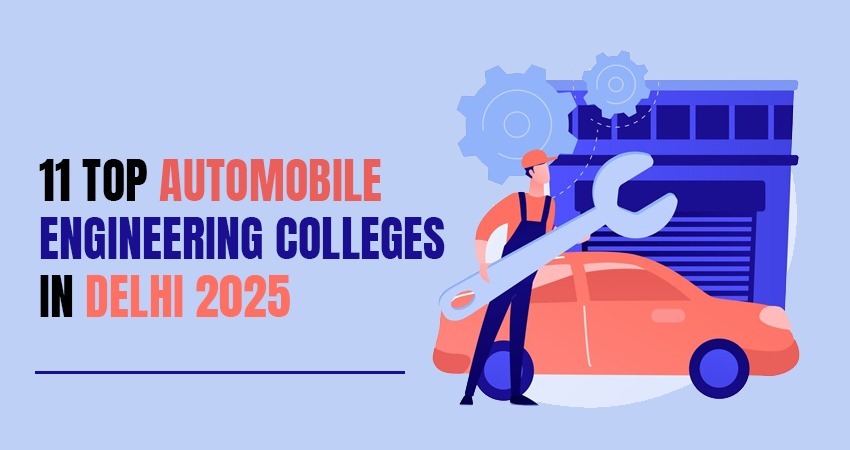
Delhi is the home of many famous automobile engineering colleges in India. To cope with ever-increasing employment needs, students now hope to be able to study at schools that offer first-rate education together with industry exposure. If you're looking for the top colleges, this guide will help you make an informed choice.
Delhi Technological University (DTU)
DTU is one of the top government engineering institutes in India. It hosts an automobile engineering program with special features towards innovation and practical outcomes. The curriculum combines theoretical along with field knowledge to prepare students for their careers in the automotive industry.
Amity University, Noida
Amity University is a private institution with a solid engineering platform. It is provided with modern laboratory equipment and industry links. This is to ensure that students have access to research projects and internships that can improve their proficiency and practical wisdom.
Guru Gobind Singh Indraprastha University (GGSIPU)
GGSIPU provides a structured B.Tech program in automobile engineering. The University concentrates on the theoretical basis for automobile engineering combined with practical field work. Students can enjoy the support of a competent staff as well as modern research.
Galgotias University, Greater Noida
Galgotias University has become famous for its advanced automobile engineering syllabus. The Institute emphasizes innovation, research and practical field experience. Students experience a series of real-life problems during internships and workshops.
Lovely Professional University (LPU)
LPU is one of India’s largest private universities. Taking into account practical expertise at the same time as fostering creativity, it provides a comprehensive course in automobile engineering. The school has fine infrastructure as well as many links with industry.
School of Engineering and Technology, BML Munjal University
This institution is well known for its emphasis on engineering education combined with management expertise. Students of automobile engineering take training both in technical skills and leadership. The university brings in experts from overseas to give students international exposure.
Greater Noida Institute of Technology (GNIT)
GNIT is an acknowledged private college offering automobile engineering. The modular makeup of the courses includes practical training, industrial visits and the possibility to conduct research. It affords a high-quality education at a low, easily affordable price.
PM Group of Institutions, Sonepat
PM Group of Institutions offers courses in various fields of engineering, and automobile engineering. The college is distinguished by its emphasis on industry-relevant training. Students work on real projects and go through internships in industry.
Delhi Institute of Engineering and Technology, Meerut
The technical college has a compact car engineering course. Programs offer both theoretical knowledge and hands-on skills. Students who study there can learn by undertaking work experience or doing an internship in industry.
Sun Rise University, Alwar
Sun Rise University leads engineering education with its reformative bent. The automobile engineering department at the school is focused on high modern technology and the development of the discipline in practice. On the one hand, the university has excellent facilities; on the other, it also has experienced faculty.
Vaish College of Engineering, Rohtak
Vaish College is a well-known institute for automobile engineering. The curricula emphasize building a solid technical foundation and study-based creative problem-solving. The school focuses on practical training and working with industry closely.
Choose the Right College for Your Future
Choosing the best automobile engineering college involves many factors. You should consider accreditation and faculty strength as well as facilities and connections with industry. Hands-on training and even research opportunities will make a significant difference to how much you can learn.
Students looking for additional help sorting out how to pick the right engineering college should head over to Engineers Heaven. We bring you expert advice, college scenarios and insights on how to develop your career.
The automobile engineering colleges in New Delhi provide a good learning experience.Whether you choose to study at a government institution like DTU, or a private university such as Amity, you need to find the right match for where your career goals lie.Begin exploring the path now and take a great leap forward into the yen world of the car business.
(Disclaimer: This statistics could be different in different part of World and Different timeline. this statistics has been generated based on data available till 2025 or relavant time span.)

Creating Sustainable Building Structures, employ sustainable materials, energy-saving designs, and smart technology. They hope to minimize waste, decrease carbon footprints, and improve environmental conditions in their homes. Keeping the growing environmental issues in mind, sustainable buildings have become increasingly important.
Why We Need Sustainable Structures
Every sector has its fair share of influences on the environment, and the construction scene has the biggest of all. Conventional buildings consume too much energy and create a lot of waste. They also depend on the non-renewable elements, and it affects nature. Sustainable buildings address these problems. Their focus is on smart design and green materials that minimize damage to the planet.
Important Elements & Components of Sustainable Buildings
● Eco-Friendly Materials
Sustainable buildings are made of materials that have low impact on the environment. Popular options include recycled wood, bamboo and reclaimed metal. Such materials help reduce deforestation and mining activities. They also help to create a circular economy by reusing resources.
● Energy Efficiency
Energy-efficient buildings consume less energy for heating, cooling, and lighting. Common solutions include solar panels, smart windows, and LED lighting. They can lower electricity bills and cut carbon emissions. Correct insulation is crucial to avoid loss of energy as well.
● Water Conservation
Water is a precious resource. Sustainable buildings provide systems for rainwater harvesting, and they include low-flow fixtures. Greywater recycling systems reduce water consumption even more. As there is a large shortage of water, such features are important and help conserve this precious resource.
● Waste Reduction
Landfills are inundated with construction waste. Sustainable buildings are about reducing waste during and after the construction phase. Plan efficient construction, modular construction, and pre-fabricated materials all eliminate excess waste. Recyclable and biodegradable materials are even better.
Use of Sustainable Methods in Construction
● Green Roofs and Walls
Example: Green roofs or vertical gardens can enhance air quality and insulation. They also help improve aesthetics while producing urban biodiversity. These elements help cool buildings and cut energy costs.
● Smart Building Systems:
Smart technologies can help make buildings more efficient. Automated lighting, climate control, and security systems can help minimize energy consumption. Smart building systems can ensure optimal comfort while minimizing environmental damage.
● 3D Printing in Construction:
3D printing can be used to minimize material waste and shorten construction durations. Building with 3D printing facilitates the optimal consumption of materials, which can reduce costs and pollution. Examples of many more technologies are revolutionizing sustainable architecture. Benefits of sustainable buildings include reduced economic and environmental costs.
Future Projections for Sustainable Construction
Green construction is predicted to boom in the future. More policies are being adopted by governments, industry leaders, and organizations across the board that promote eco-friendliness. Many ongoing initiatives to drive this sustainability campaign are being refreshed. The demand for sustainable facilities is anticipated to double as the population continues to age, placing even greater emphasis on investing in sustainable building practices.
The Ultimate Choice for Green Construction: Engineer’s Heaven
Engineer Heaven is the go-to resource for professionals and enthusiasts seeking in-depth knowledge on sustainable building strategies. With expert insights and valuable information, we provide the guidance you need to stay informed and inspired. Visit Engineer Heaven today and explore how we can work together toward a sustainable future.
(Disclaimer: This statistics could be different in different part of World and Different timeline. this statistics has been generated based on data available till 2025 or relavant time span.)

Nano-materials are changing the way we innovate across industries from medicine to electronics. Their synthesis and development are of fundamental importance for the science and engineering of the future.
In Engineer’s Heaven we discuss about latest Innovations in Nano-materials and Their Applications Now let’s discuss how these materials are processed and developed.
What Are Nano-Materials?Nano-materials are materials that have structural features at the nanometer scale (approximately 1-100 nm). They have distinct properties at this scale — high strength, conductivity, and reactivity, among others. These features make them useful in medicine, energy and electronics.
Nano-Materials Synthesis TechniquesNano-materials can be synthesized by Two general approaches: top–down and bottom–up methods. They each have their own benefits and uses.
Top-Down Approach
This involves breaking down larger materials into nano-sized particles. The mechanical or chemical methods can be used to achieve this.
- BallMilling: It is a very popular way of grinding bulk materials into nano-powders by mechanical energy. It can produce metal and ceramic nanoparticle.
- Lithography: A technique involving light or electron beams to imprint nano-patterns on surfaces. This trend is prevalent in semiconductor production.
- Etching and Laser Ablation: Layers are removed from a bulk material to generate nano-structures.
Bottom-Up Approach
Here, atomic or molecular structures can be constructed atom by atom or molecule by molecule. This technique imitates nature, and is very controlled.
- Chemical Vapor Deposition (CVD): Here, solid nano-materials are formed on any surface through gaseous precursors. Graphyne is an analog of graphene and carbon nanotubes.
- The sol-gel method: This is a chemical process, which leads to the production of nano-materials from a solution. This is employed in the most for relative coatings and catalysts.
- Self-Assembly: Weak chemical interactions cause molecules to arrange on their own into ordered nano-morphologies.
Nano-materials are being utilized in advanced sectors with the pace of development. Research is still ongoing to make them faster, more stable, and more scalable.
Carbon-Based Nano-MaterialsThis includes materials such as graphene and carbon nanotubes, bringing around a paradigm shift in electronics and energy storage. They're extremely powerful, light, and have wonderful electrical conductivity.
Ion Shuttle Play for Metal and Metal Oxide Nano-MaterialsThey are used in catalysts, batteries and medical applications. Gold and silver nanoparticles are known to have antimicrobial properties, thus can be used in healthcare.
Polymeric Nano-MaterialsThese nano-polymers are improving drug delivery and tissue engineering. As, they are biocompatible, thus ideal for medicinal applications.
Quantum DotsSemiconductor nanoparticles exhibit exceptional optical properties. They are utilized in display technologies, bio-imaging, and solar cells.
Real-World ApplicationsIndustries are already being revolutionized by the developments of nano-materials. Some of the most powerful applications are:
- Medicine: Nano-particles works in Delivering drugs to cancerous tissue
- Electronics: Nano-materials make smaller and faster transistors possible.
- Energy: Nano-structured solar panels and batteries improve energy efficiency.
- Environment: Nano-filters clean pollutants from air and water.
More research is making nano-materials more accessible and cheaper. Bio-degradable and sustainable nano-materials are in the process of development by scientists to reduce the impact of the environment. AI and machine learning help you in designing new nano-structures with optimized properties.
Read More on Engineer’s HeavenNano-materials are the future, and we’re telling you know about the most recent advances at Engineer’s Heaven. Subscribe and get insights through in-depth research, industry news, and expert opinions. Visit Engineer's Heaven to learn more about nanotechnology and innovations in engineering!
(Disclaimer: This statistics could be different in different part of World and Different timeline. this statistics has been generated based on data available till 2025 or relavant time span.)

Safety training is indispensable across industries such as construction, manufacturing, aviation, and healthcare. Conventional techniques typically use manuals, videos, and physical drills. But they have limitations. Sapless, slow and at times dangerous for trainees, they can be expensive.
What is Virtual Reality in Safety Training?Typically, VR makes use of physical interaction devices to enhance the experience of the user. They behave in their environment as if they were real beings. This allows you to learn by doing without putting anything at risk.
Machine Vision is not the only technology Engineer's Heaven is promoting. VR turns safety training into something more engaging, impactful, and practical.
Advantages of virtual reality in Safety Training- A Learning Environment Free of Risks
And while many workplace hazards are too great to simulate in real life. In a controlled environment, for example, VR enables trainees to experience emergencies such as fires, machinery failures or chemical spills. They learn how to react with no real threat involved.
- Improved retention and engagement
Reading about safety, watching videos — that’s passive learning. VR is interactive. Research has shown that we remember things better when we engage actively. VR training helps trainees remember protocols better.
- Cost-Effective and Scalable
Training sessions often require instructors, venues and equipment. VR eliminates these expenses. A VR program can be built and used several times over for various trainees. Organizations can provide accommodation seamlessly without the overhead.
- Realistic Scenarios
VR perfectly replicates real-world environments in considerable detail. Workers can practice using equipment, navigating complex workspaces, or dealing with emergencies as they would in the workplace. This would further prepare them for real life scenarios.
- Monitoring and Evaluation of Performance
VR training programs monitor how well users are performing. They scrutinize reactions, teach decision-making and improve skills. The trainers use this data to find out the weaknesses and improve the students learning outcomes.
Sectors that are Reaping Rewards with VR Safety TrainingConstruction
Construction sites pose plenty of potential hazards. VR can help workers practice operating heavy machinery, working high above the ground and responding to emergencies like a site collapse or electrical failure. Engineer’s Heaven offers updates on the newest developments in VR for this industry.
Healthcare
Doctors, nurses and medical personnel rehearse simulated surgeries and emergency situations. VR allows them to hone precision skills, unfettered and without endangering patients.
Aviation
For flight emergencies, engine failures, and evacuation drills, pilots and crew members complete VR simulations. So they are prepared for any real-life crisis.
Manufacturing
Factory workers train on complex machinery, no real hazards involved. They train in safety measures and avoid on-the-job injuries and expensive equipment damages.
How VR Can Transform Safety Training in the FutureThe VR technology is advancing day by day. As artificial intelligence will be a part of this, the simulations will be even more intelligent and personalized. Training programs will be personalized by companies to suit individual needs. The AR will also be assimilated with VR to give a richer taste of learning.
Engineer’s Heaven — Update engineers on this new facility of Virtual Reality in safety training. However, there is so much more to it — the platform offers valuable resources, industry insights, and expert discussions around emerging technologies.
ConclusionVR is changing the game for safety training. It offers a secure, effective, and interesting manner to prepare employees within sectors. Some companies using VR have reported fewer accidents, better skills, and savings.
Engineer’s Heaven:Your Ultimate Source for Expert Insights: Stay ahead with the latest trends, innovations, and future-defining solutions in safety training
(Disclaimer: This statistics could be different in different part of World and Different timeline. this statistics has been generated based on data available till 2025 or relavant time span.)

AI is revolutionising the software engineering world. They are incorporating AI into their workflows to develop solutions that are smarter, quicker, and optimised. Let’s explore how artificial intelligence is revolutionizing industries and changing the way we work.Check out 10 of the best ways software engineers are leveraging AI today
● Automating Code Generation
It takes time and effort to write code. When engineers write code, AI-powered tools like GitHub Copilot and OpenAI Codex help them by recommending code snippets in real-time. By eliminating repetitive coding tasks and minimising human errors, these tools better the productive capacity of the developers.
● Enhancing Software Testing
Manual testing is slow and error-prone. From the detection of bugs to the prediction of failures before they occur, AI is revolutionising the testing process. Tools like Selenium and Test.ai assist engineers in running tests faster to achieve great software quality.
● Debugging and Error Detection
AI-based debugging tools can help in evaluating expansive codebases for identification and resolution of bugs. They recognise patterns in faults and help engineers to fix the issues. It accelerates development and enhances the reliability of software.
● Optimizing Performance
AI allows engineers to improve the performance of the software by studying graphical information about the system and predicting future bottlenecks. Backend code restructuring, database management, or cloud computing, it proposes optimisations to increase efficiency.
● Improving Cybersecurity
Natural language processing adds to security by finding and eliminating threats in real time. It uses patterns to find vulnerabilities and stops cyberattacks before they occur. Engineers leverage AI in firewall management, malware detection, and fraud detection.
● Enable Natural Language Processing (NLP)
Task-specific models, for example, were trained to understand and generate human language using NLP. AI-powered NLP models, chatbots, voice assistants, and translation services are used by engineers. These are oriented towards improving user interactions and accessibility.
● Enhancing Personalization
AI assists in establishing personalised experiences for users. Recommendation engines track user behavior to deliver relevant recommendations, from e-commerce websites to streaming platforms to digital marketing.
● Automating DevOps
By automating procedures such as deployment, monitoring, and incident management with the help of AI, DevOps workflows are improved. Predictive analytics can also be particularly impactful in IT, helping engineers predict threats and eliminating downtime of systems.
● They Are Going to Revolutionise Data Analytics
AI is used by software engineers. AI-based analytical tools that can extract valuable insights from large and complex datasets lead to better business decisions and the development of technology.
● Advancing Autonomous Systems
AI actually teaches them to work on themselves, robotics, self-driving cars, and intelligent automation. Engineers create software that conforms and acts based on information in the moment.
The importance of AI in the field of software engineering
AI is revolutionising the process through which engineers create software. It opens the door to greater efficiency, better security, and new opportunities. As AI evolves further, software engineers will find more and more innovative ways to profit from these hot technologies. Thus, the role of AI in software engineering is undeniable.
Visit Engineer's Heaven for more insights on AI and software development. We are here to guide you as a community of engineers and help you grow together.
(Disclaimer: This statistics could be different in different part of World and Different timeline. this statistics has been generated based on data available till 2025 or relavant time span.)
 An Environmental Data Analyst
Environmental challenges are more pressing than ever. As climate change, pollution, and resource depletion increase, so does the need for specialists who can interpret and analyse environmental data. If you are looking for a career offering both a passion for the environment combined with data, the role of an environmental data analyst is for you.
What Does the Environmental Data Analyst Do?An environmental data analyst collects and processes environmental data. Their focus is on data about air quality, water resources, climate trends, and ecosystem health. They provide the sound data that allow governments, businesses, and organisations to make informed decisions to save the planet.
Phase 1: Obtain The Necessary EducationIt all starts with a solid educational background. A bachelor’s degree in environmental science, data science, geography, or a related field is required. Some professionals study environmental statistics, computer science, or engineering, too.
A master’s degree in environmental data science or a master’s in geographic information systems (GIS) would serve to further your career prospects. It gives you an advantage to take up specialised roles.
Step 2: Sharpen the Necessary SkillsAn environmental data analyst requires a combination of technical and analytical abilities. Here are some key ones:
● Data Analysis & Statistics
Data may be essential. Learn how to apply statistical techniques and software (R, Python, and MATLAB) to environmental datasets.
● You are a learner in GIS 101.
Geospatial analysis software such as ArcGIS and QGIS allows us to visualize environmental changes over time. GIS is also a widely used technology nowadays.
● Programming & Automation
Working with large datasets requires Python and SQL expertise. Data collection automation saves time and is more efficient.
● Environmental Science Background
Educating ourselves about ecosystems, pollution, and climate science leads to more accurate data interpretation.
● Communication & Reporting
Just having data is futile if not displayed in a good manner. Understand how to present your findings through reports, dashboards, and visual presentations.
Step 3: Get Practical ExperienceEmployers most definitely prefer profiles with real-world experience. Here’s how to get it:
● Internships – Gain experience with research laboratories, environmental agencies, or private companies.
● Freelancing & Projects — Join some online platforms and choose smaller projects on data analysis.
● Volunteer Work– Many NGOs and conservation groups need help in data analysis.
● Personal projects – Work with publicly available datasets to improve your skills.
Engineer Heaven is a community which provides every kind of helpful content for the students and professionals to learn practically through the live projects in the industry.
Step 4: Building a Good PortfolioThe portfolio shows your skills. Include:
● Data visualization projects
● Environmental reports
● GIS mapping examples
● Statistical case studies for analysis
It really makes an impact when you are applying for a job.
Step 5: Follow The Talks and Forest WorksIt is the era of environmental data. Stay ahead by:
● To stay up to date, attend industry conferences and webinars.
● Connecting to LinkedIn groups and professional organisations
● Networking with Engineering professionals on Engineer's Heaven.
Step 6: Find the Right JobStart applying for jobs like in these industries:
● Climate research organizations climate research climate change
● Energy and utility companies
● Environmental consulting companies
● Nonprofit organizations
Conclusion
So, if you are to take a journey toward this career as an environmental data analyst, it would be a journey well worth taking. Linked in with the right education, skills, and experience to make real change in the planet. Check out Engineer’s Heaven for expert tips, helpful insights, and everything you need to get started.
(Disclaimer: This statistics could be different in different part of World and Different timeline. this statistics has been generated based on data available till 2025 or relavant time span.)
.jpeg)
One of the fastest-growing fields in the present is industrial engineering. It combines engineering, management, and problem-solving. So, what makes many of them so keen on it compared to other branches, and why choose industrial engineering? That you have a lot to benefit from it, as it itself brings a lot to the modern world.
So, welcome to Engineer's Heaven, helping you find your way in the ever-changing field of engineering. This blog is going to help you understand why industrial engineering is a top option, regardless of whether you are considering it or are already studying it.
Engineering Management: An Unbeatable Combination
Industrial engineering is not just about machines and factories. Which combines technical skills with business knowledge. This field interests students who like to optimize processes, reduce costs, and improve efficiency.
Unlike other engineering branches, which focus on a single area, industrial engineering includes:
● Supply chain management
● Quality control
● Production planning
● Operations research
● Human factors engineering
Therefore, it is best for students who would like to have a more dynamic career rather than being affiliated with one discipline.
High Demand Across Industries
Limited scope is one of the many key benefits of the industrial engineering discipline. It goes beyond factories or manufacturing plants. Industrial engineers are hired by companies in various industries, including:
● Healthcare
● Logistics
● Retail
● Aerospace
● IT and software firms
Graduates are not one-sector-specific only. They can dive into industries and try on different roles during their careers.
At Engineer's Heaven, we render to students the knowledge of these various opportunities and selecting a suitable path.
High-Paying Career Paths
Having job stability and salaries that are often above many other engineering disciplines attracts most students to industrial engineering. Firms highly value those who can increase productivity and reduce waste. This has a direct effect on profitability, and as such, industrial engineers are invaluable to businesses.
Here are a few of the top roles in this area:
● Process Engineer
● Operations Manager
● Supply Chain Analyst
● Quality Engineer
● Systems Analyst
Because of experience, industrial engineers will go to senior management. This makes it an ideal career choice for those who want to go to a leadership position.
Emphasis on Problem-Solving and Innovation
They help solve real-world problems and ensure good processes. They discover ways to increase efficiency, decrease costs, and streamline processes. This keeps the job not only exciting but also intellectually stimulating.
If you enjoy challenges and have a mathematical, analytical mind, there are limitless potentials. But what if you are an industrial engineer? Industrial engineers are active innovators, from making hospital workflows more efficient to designing smart factories.
Global Career Opportunities
Industrial engineering is recognized all over the world. As efficiency and optimization are required in every industry, industrial engineers have the potential to work anywhere in the world. Multinational corporations are in demand for individuals who can streamline operations in varying countries.
It also creates opportunities for education and research at the international level. Оrlу, mаnу unіvеrsіtіеs offer speсіаlіzеd programs, hеlріng students tо trу new techniques and lеаrn.
Ideal for the Flexibility- Hungry
Other engineering disciplines have strict specialization requirements, whereas industrial engineering enables you to have flexibility. Graduates may seek positions in technical jobs, managerial roles, or entrepreneurship.
Indeed, many industrial engineers go on to work as consultants, helping companies figure out how to improve their performance. Some found their own companies, using their talents to create new solutions.
That versatility is why those with a focus on career flexibility tend to favor industrial engineering.
A Future-Proof Field
Just harder, faster—technology is revolutionizing industries. The future of work is being shaped by artificial intelligence, automation, and data analytics. It is industrial engineers who most often leverage these cutting-edge innovations in business contexts.
Industrial engineers are still in high demand in today’s age of smart manufacturing, sustainable production, and digital transformation as companies adopt new technologies to meet the needs of the fourth industrial revolution. This guarantees your career is future-proof and offers a plethora of growth opportunities.
Final Thought:
We help the students to get the industry updates. At Engineer’s Heaven With insights from our platform, we ensure engineers from our end think and work on building a brisk career in this dynamism.
Engineer Heaven has been here to help if you're interested in pursuing a career as an industrial engineer. Use our resources to connect with experts and start moving towards a bright future.
(Disclaimer: This statistics could be different in different part of World and Different timeline. this statistics has been generated based on data available till 2025 or relavant time span.)
(Source: 1. https://www.topuniversities.com/blog/5-reasons-study-industrial-engineering
2. https://www.imse.iastate.edu/undergraduate-program/why-choose-ie/
3. https://www.bachelorsportal.com/articles/636/what-is-industrial-engineering-and-why-should-i-study-it.html)
